

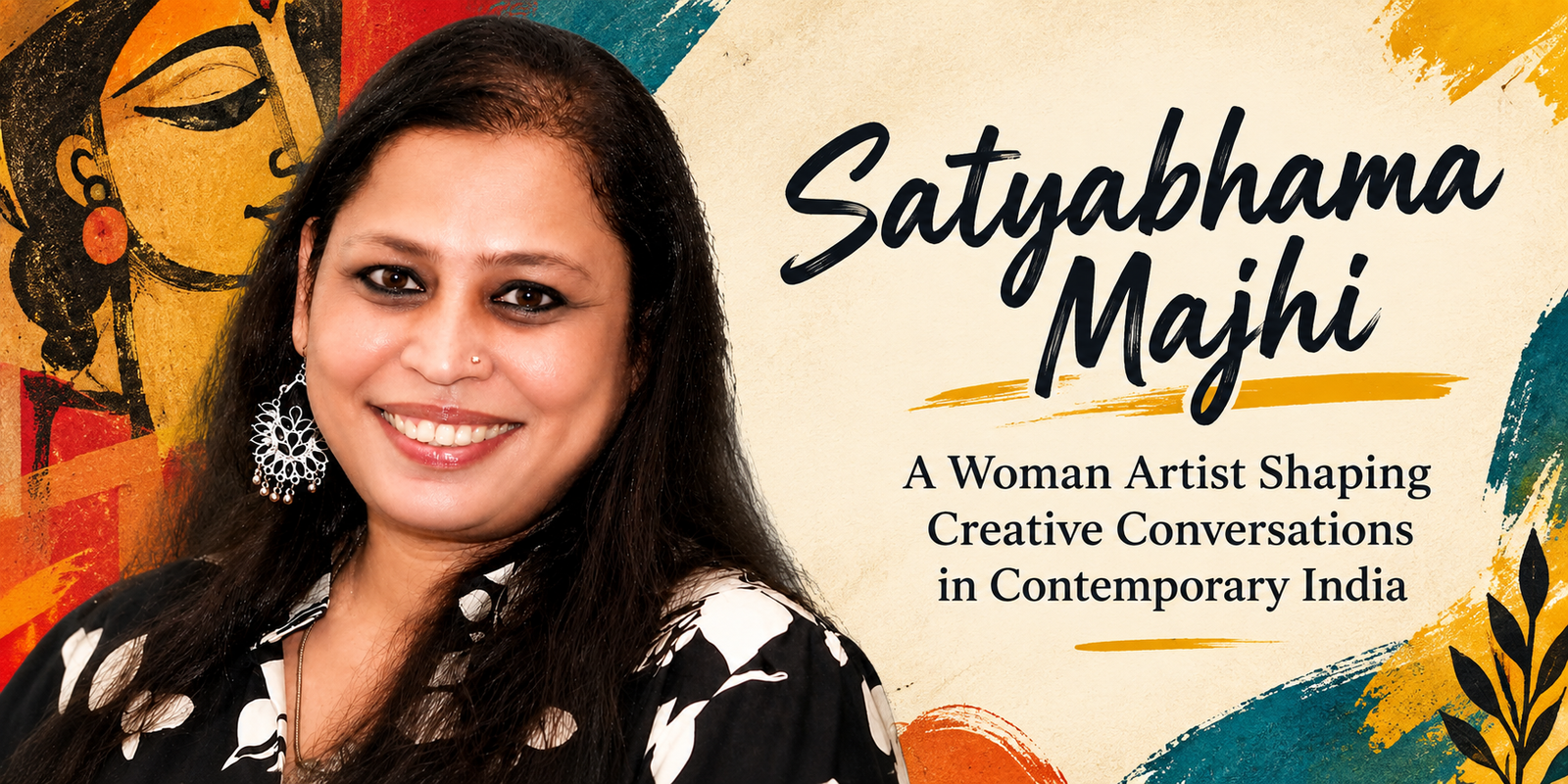
Art does not always belong inside galleries and museums. Sometimes it becomes most visible when it enters the spaces where people live, work, travel and gather. A wall, street, neighbourhood, school or public building can become a place where artistic expression meets everyday life.
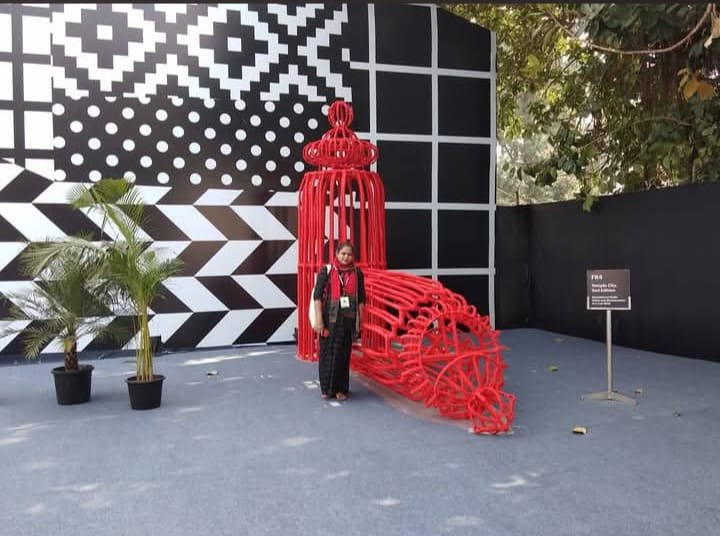
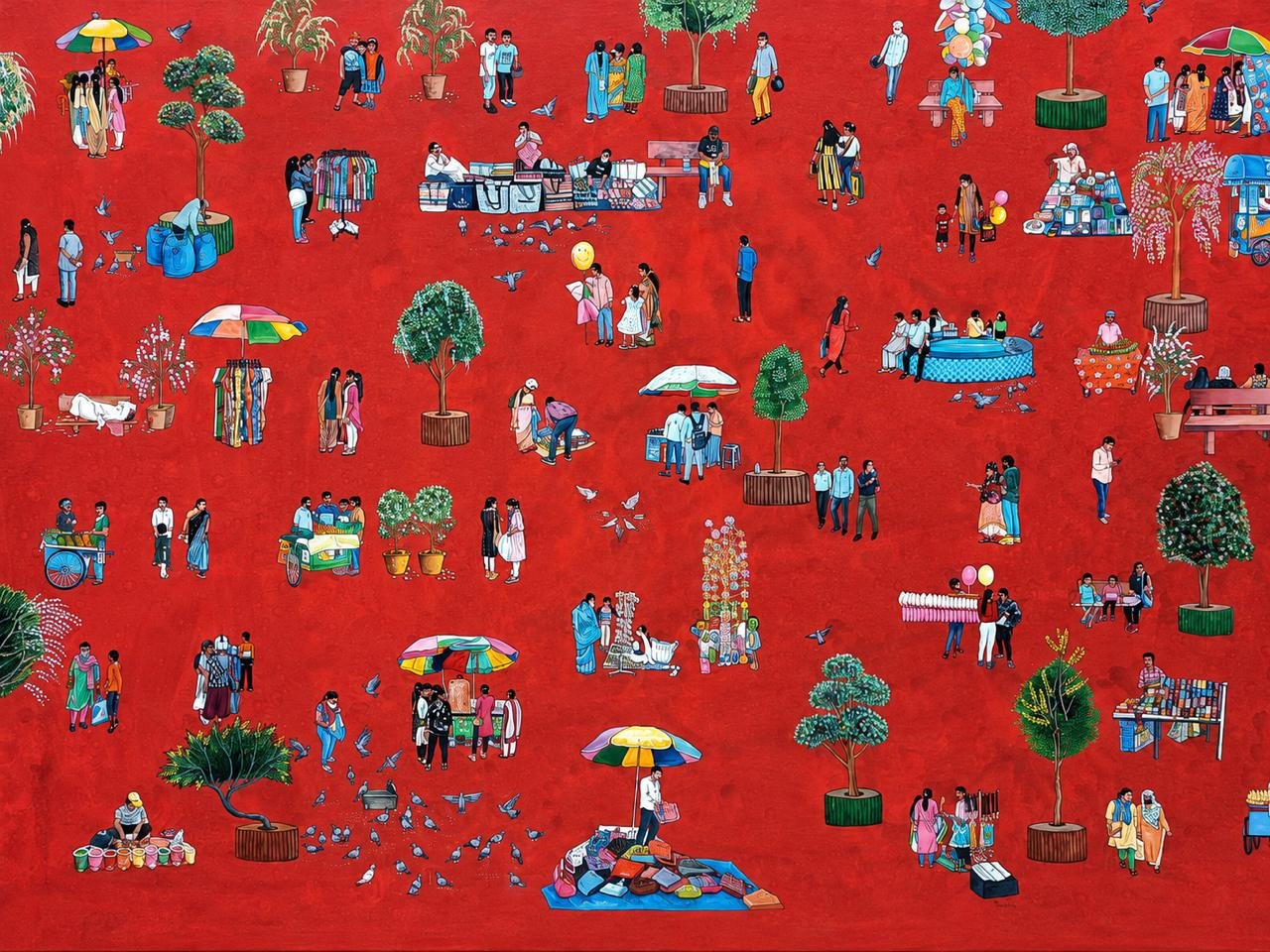
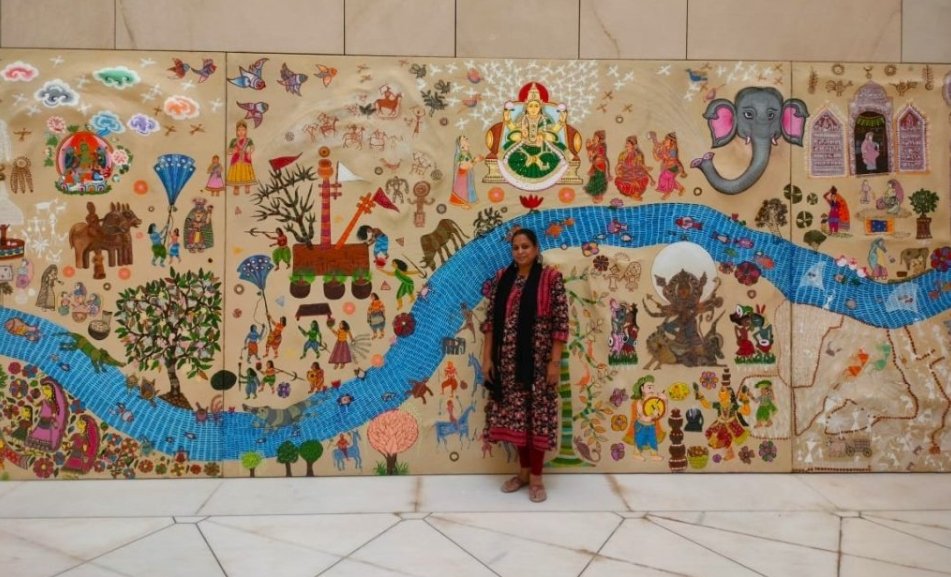
The public-art practice of Satyabhama Majhi explores this expanded understanding of where art can exist. Through murals, community-based projects, installations and collaborative initiatives, she has contributed to a form of contemporary practice in which public space becomes more than a physical setting. It becomes a cultural environment capable of carrying stories, memories and shared experiences.
For Majhi, the significance of public art lies not simply in making a space visually attractive. It lies in creating opportunities for people to encounter art as part of their ordinary surroundings.
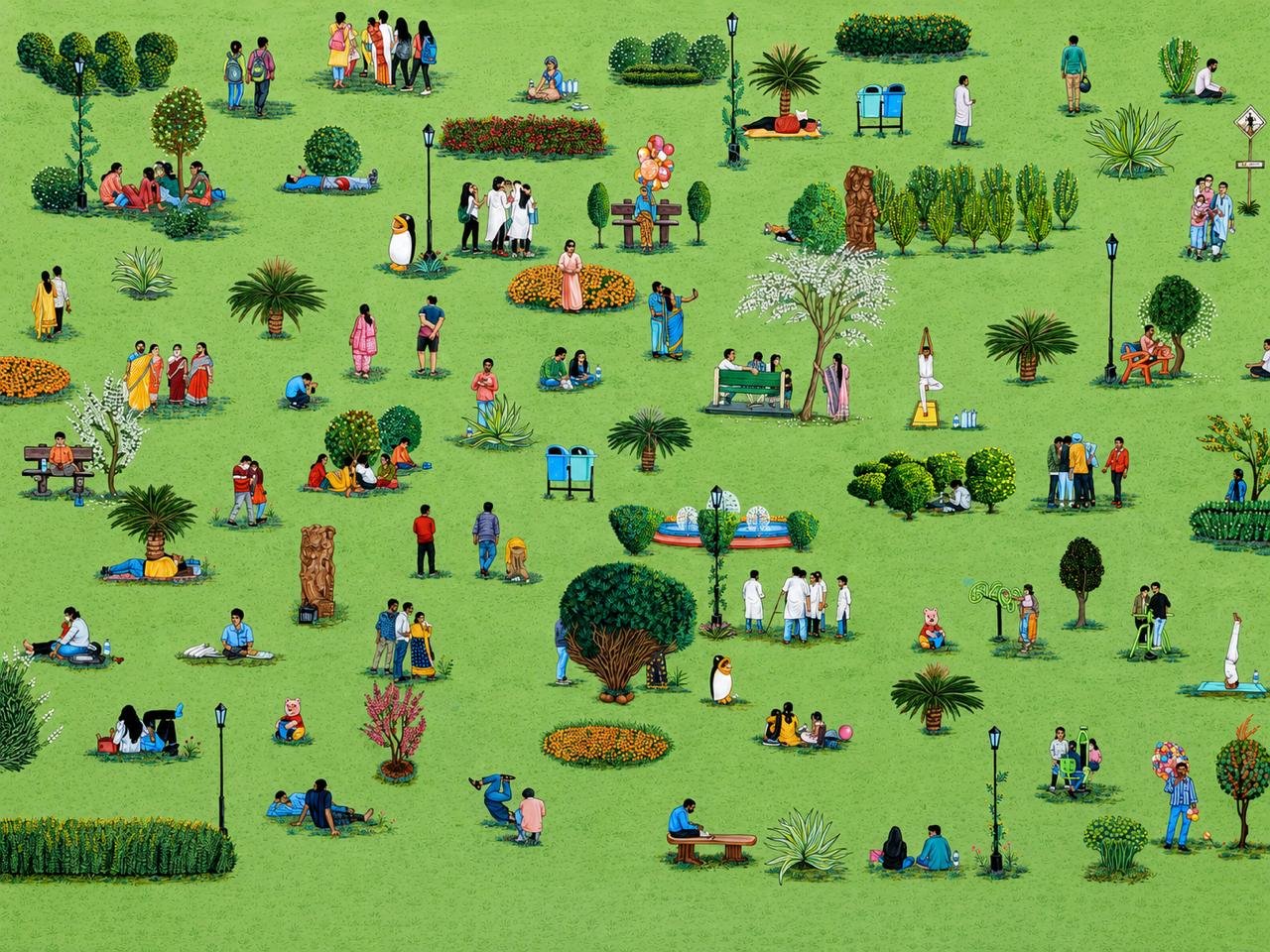
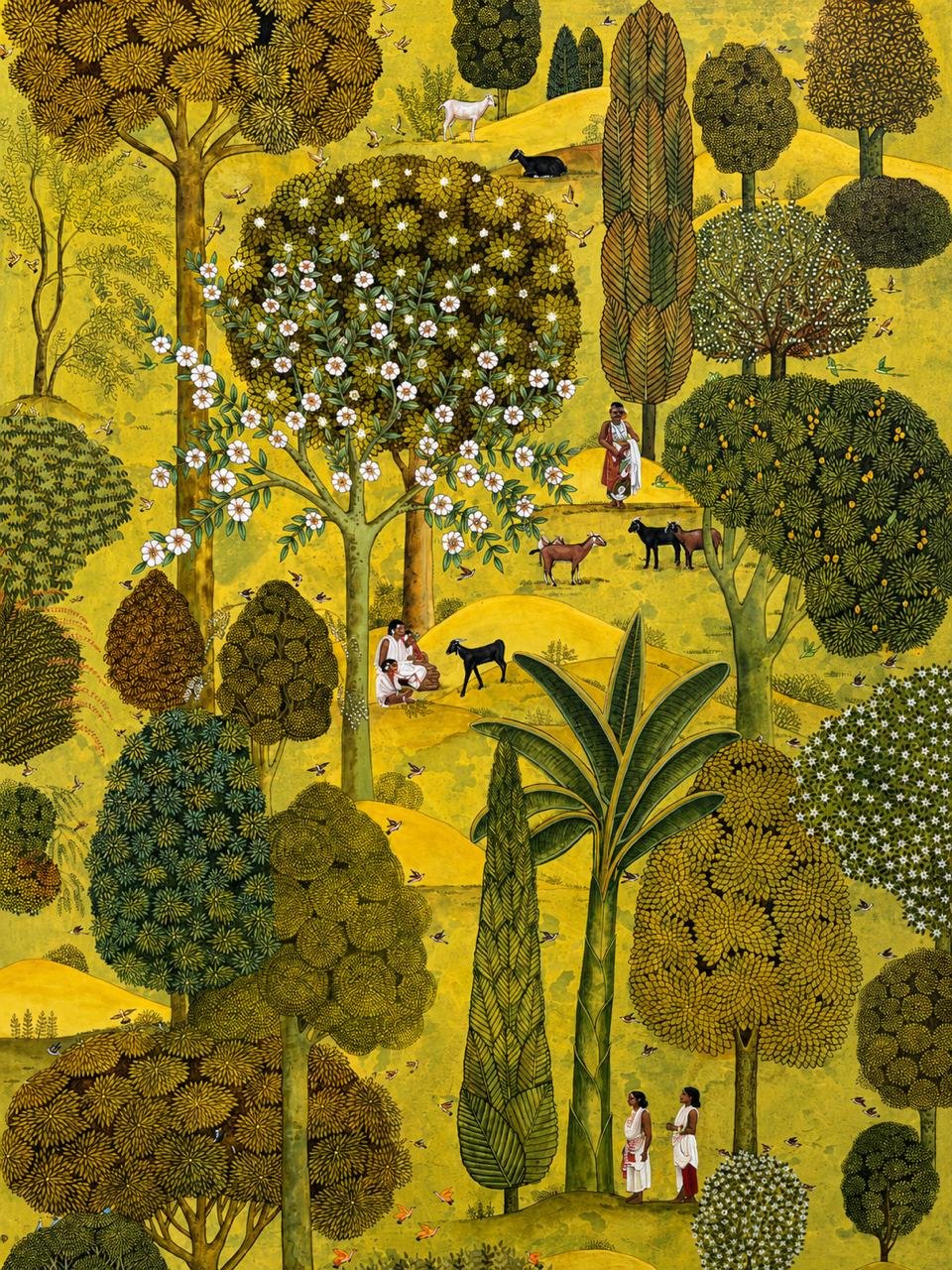
When Art Leaves the Gallery
The gallery traditionally provides a controlled environment for viewing art. The visitor enters with the expectation of looking at artworks.
Public art works differently.
People may encounter it without planning to see it. A person walking through a neighbourhood may notice a mural. A child may pass the same artwork on the way to school. A shopkeeper may see it every morning. Visitors attending a public event may encounter a large-scale artwork as part of the surrounding environment.
This unplanned relationship changes the character of artistic experience.
Majhi’s public-art projects demonstrate how contemporary visual language can enter everyday environments and reach audiences who may not regularly visit galleries.
The artwork becomes part of daily life.
Public Spaces as Cultural Environments
A public space is never completely neutral.
It carries memories of the people who use it, the activities that take place there and the histories associated with it. When art enters such an environment, it interacts with those existing layers.
Majhi’s work in places across Odisha reflects an awareness of this relationship between art and context.
Her public interventions and murals have appeared in environments connected with communities, cultural activities and major public events. Such projects allow visual expression to become part of the identity of a particular place.
Instead of simply occupying a wall, an artwork can gradually become associated with the place itself.
Murals and Collective Memory
Large-scale murals possess a particular ability to become landmarks.
Unlike a painting stored inside a private collection, a mural remains accessible to people moving through the surrounding area. Its repeated presence can make it part of people’s visual memory.
Majhi’s public-art work in Odisha, including projects associated with Cuttack and Bhubaneswar, demonstrates the potential of murals to create these kinds of connections.
A public artwork may initially attract attention because of its size or visual character. Over time, however, its deeper significance can come from familiarity.
People begin to recognise it.
They associate it with a street, neighbourhood or event.
The artwork becomes part of the memory of the place.
Art and Everyday Encounters
One of the strengths of public art is its ability to create small moments of interaction.
A passer-by may stop for a few seconds.
A child may ask a question about an image.
Two people may discuss what they see.
Someone may photograph the artwork and share it with others.
These encounters may appear ordinary, but collectively they contribute to the cultural life of public art.
Majhi’s approach allows these everyday encounters to become part of the artistic experience. The audience does not have to possess specialist knowledge of contemporary art to participate.
Looking itself can become a form of engagement.
Connecting Local Experience With Contemporary Art
Majhi’s artistic practice frequently draws upon experiences of place, community, culture and environment. Bringing such concerns into public spaces creates opportunities for local experience to become visible within contemporary artistic language.
This is particularly important in a rapidly changing environment.
Cities expand. Neighbourhoods transform. Traditional spaces disappear or acquire new functions. Public environments are constantly being reshaped.
Art can provide another way of remembering what those spaces mean.
Rather than documenting a place only through photographs or written records, a public artwork can create a symbolic representation of the relationships people have with their surroundings.
Public Art as a Shared Cultural Conversation
Majhi’s community-oriented approach also suggests that public art can encourage dialogue.
When artworks appear in shared environments, they become available to different groups of people. Individuals with different ages, occupations and cultural experiences can encounter the same work.
Their interpretations may differ.
One viewer may notice colour.
Another may respond to a figure or symbol.
Someone else may connect the artwork with a personal memory.
This diversity of interpretation is one of the defining possibilities of public art.
The artist initiates the visual conversation, but the public continues it.
The Importance of Context
For Majhi, context plays an important role in how an artwork is experienced.
The same image can have a different meaning depending on whether it appears inside a gallery, on a community wall, within an educational setting or in a major public cultural project.
Location influences interpretation.
Scale influences attention.
Surroundings influence meaning.
People’s existing relationship with the place also influences how they respond.
This makes public art a particularly rich field for an artist interested in the connections between people, place and cultural memory.
Beyond Decoration
Public art is sometimes reduced to decoration. A mural may be judged simply by whether it makes a wall look more attractive.
Majhi’s practice points toward a broader understanding.
Public art can carry cultural references, encourage participation, create visibility for artistic traditions and contribute to the identity of a shared environment.
Its value can therefore be visual, social and cultural at the same time.
This expanded role is especially relevant to contemporary Indian art, where artists increasingly engage with communities and public environments rather than limiting their practices to studio production.
From Physical Space to Emotional Place
Perhaps the most interesting transformation occurs when a physical location becomes an emotional place.
A street is a physical space.
But memories can make it meaningful.
A neighbourhood is a collection of buildings.
But community experiences can give it identity.
A public wall is a structure.
But an artwork can turn it into a point of recognition.
Majhi’s public-art practice operates within this space between physical environment and cultural meaning.
Her work demonstrates how visual art can participate in the process through which people experience and remember places.
A Broader Audience for Contemporary Art
Public art also expands the definition of who contemporary art is for.
The audience is no longer limited to collectors, critics, students or regular gallery visitors. It includes people encountered in ordinary public life.
This democratizing potential makes public art particularly significant.
Majhi’s projects demonstrate that contemporary artistic ideas can communicate through accessible visual forms while remaining connected to deeper questions of identity, memory, environment and community.
The Continuing Cultural Life of Art
An artwork’s physical creation may have a definite beginning and end, but its cultural life can continue for much longer.
People encounter it.
They remember it.
They interpret it.
They photograph it.
They talk about it.
Eventually, it can become part of how a place is recognised.
This continuing life is one of the most meaningful possibilities within Satyabhama Majhi’s public-art practice.
Her work suggests that contemporary art can become embedded in everyday environments without losing its ability to provoke thought. Instead, it can gain new meaning through repeated encounters with the public.
In this sense, Majhi’s public art is not simply about putting art into public spaces. It is about allowing those spaces to participate in the life of art.
The wall becomes a meeting point.
The neighbourhood becomes a gallery without conventional boundaries.
The audience becomes part of the story.
And the artwork becomes part of the cultural memory of the place.