

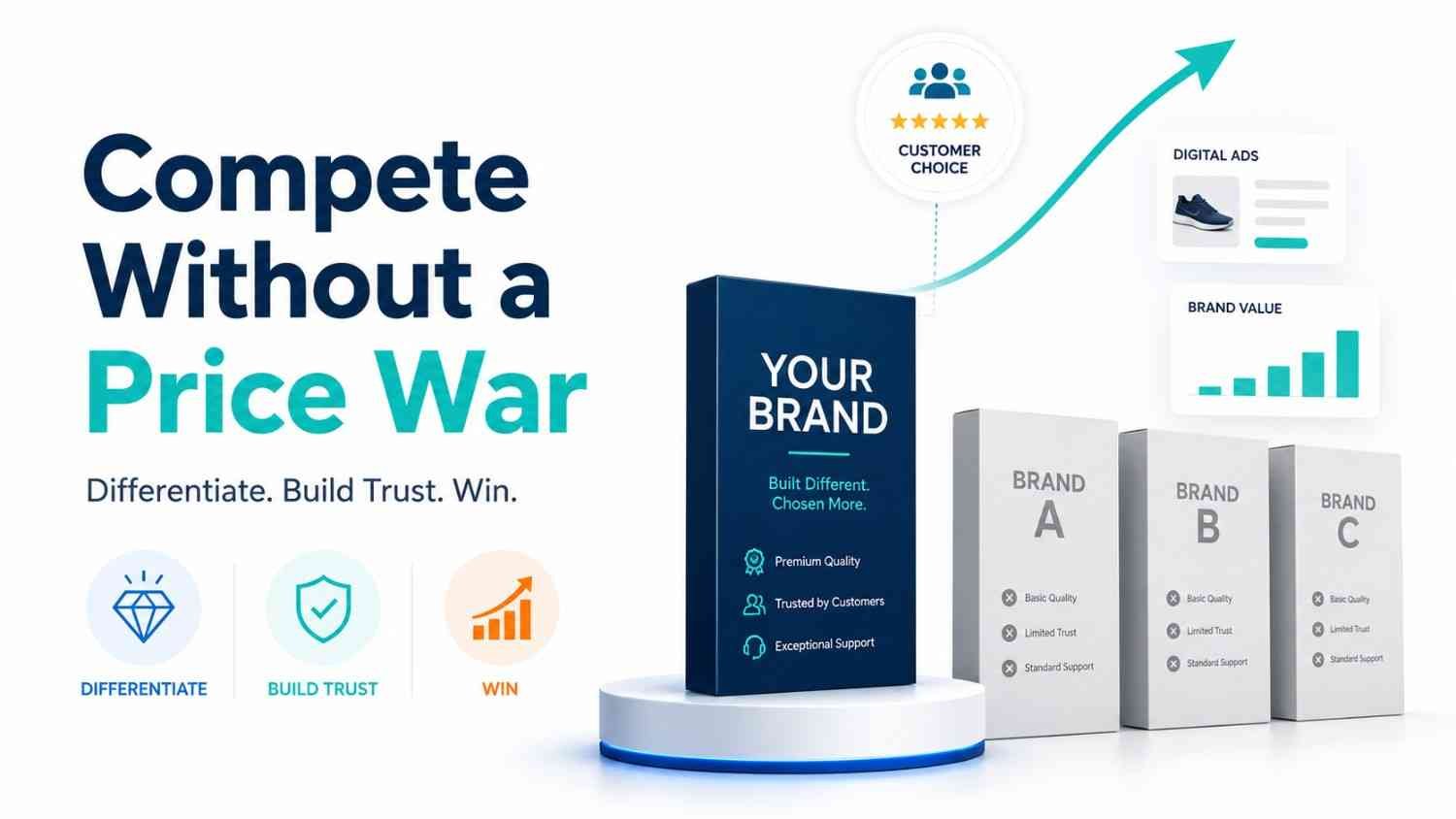
Competition becomes dangerous when a brand has no meaningful difference in the customer’s mind. When two products look similar, say similar things and appear at similar prices, buyers compare only on discounts. That is a race few businesses can win for long.
The stronger response is not to be louder. It is to become easier to choose.
Compete on Meaning, Not Just Visibility
A clear competitive position begins with one promise that customers can repeat. It might be superior convenience, better expertise, a distinct product experience or a more trusted local presence. Strong community PR can help a brand earn recognition through genuine local relationships instead of borrowed attention.
Internal teams need to understand that difference too. A well-designed employee family-day experience can reinforce culture and turn employees into more credible brand advocates. The practical story should then be visible everywhere customers compare options. A focused Kochi video-editing workflow can turn one product conversation into demonstration clips, customer proof and clear social assets.
Reduce the Reasons Customers Hesitate
The aim is not to claim that competitors are poor. It is to remove uncertainty around your own offer. The cause-specific approach used in agriculture and farmer NGO marketing offers a useful principle: speak to a real audience need, use the right context and show credible proof.
A defensible competitive strategy usually includes:
- One memorable benefit instead of a long feature list
- Product proof customers can understand in seconds
- A purchase route that makes trying the brand simple
For high-consideration categories, a relevant finance campaign media layer can add authority, while targeted Zee digital display advertising keeps the brand visible during active research. A complementary ABP digital-display plan can support measurable consideration rather than relying only on broad reach.
Build Advantages That Are Harder to Copy
Competitors can copy an offer, headline or discount quickly. They cannot copy a clear product system, trusted local relationships and a better customer experience overnight. Interactive visuals are one useful example: 3D e-commerce product rendering can make variants and product benefits easier to compare before purchase.
Market relevance matters as well. A focused agriculture-segment sponsorship can help an agri brand occupy a credible category context. For mass retail categories, Hindi retail and e-commerce advertising and Marathi digital advertising can adapt the same core promise to regional buying behaviour.
Finally, do not treat quick commerce as only a delivery channel. A disciplined quick-commerce strategy for brands connects packaging, listings, pricing, trial bundles and a D2C follow-up route.
The best response to competition is not to cut price first. It is to make the brand more distinctive, more useful and easier to trust at every point of choice.